The complete guide
Electric Poultry Netting: setting up electric poultry netting safely, from earthing the energiser to keeping the lower wires clear of grass
Buying electric poultry netting for the first time raises the same handful of questions every time: how much do I need, how do I stop it sagging, and will it actually do the job. Here is what matters for hotline poultry net specifically.
Measuring your run
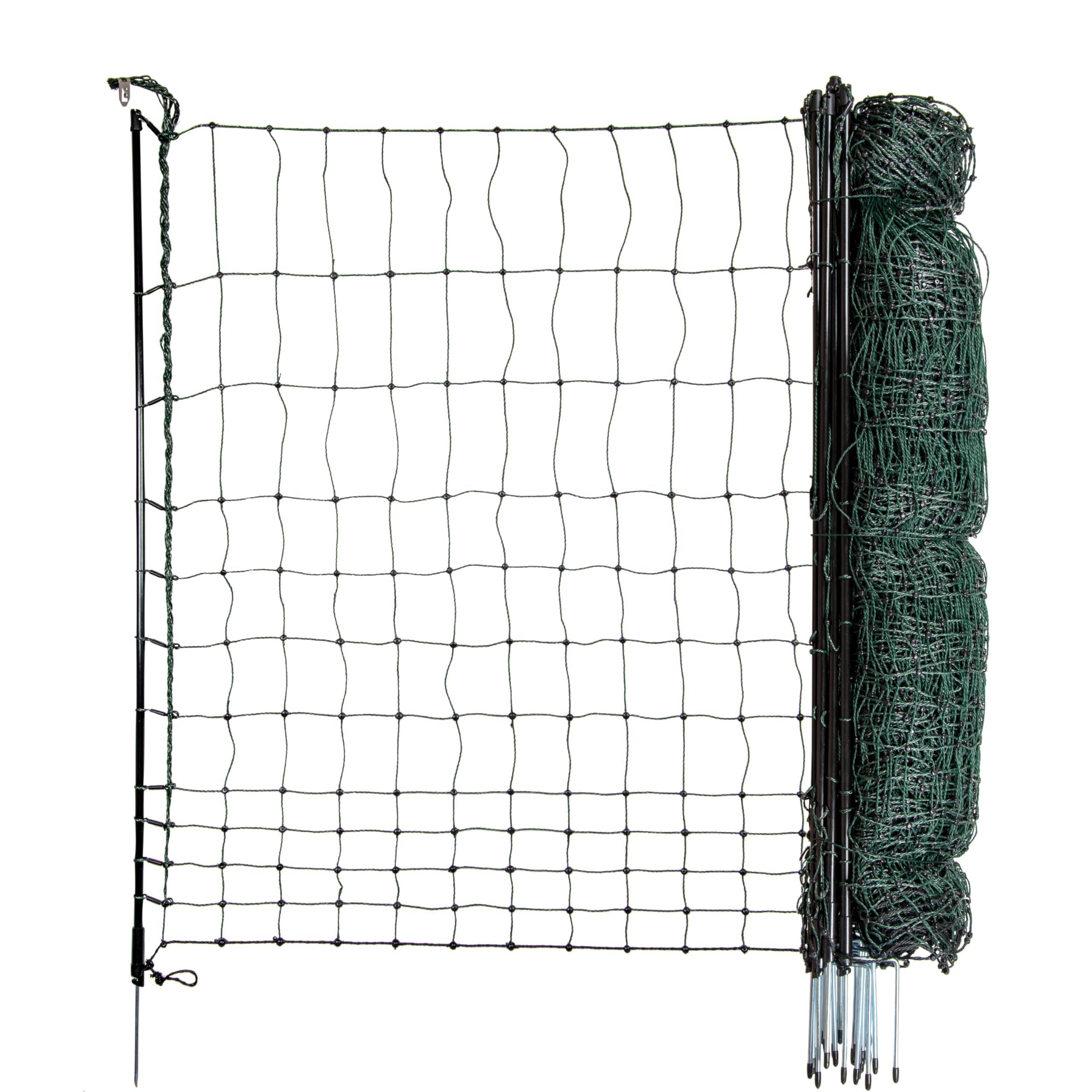
Measure the full perimeter of the area you want to enclose, then add a little extra for overlap at joins and for wrapping around corner posts rather than cutting and rejoining. 25m long x 110cm high, single-spike fibreglass posts is what this particular roll or kit gives you — check it against your measured perimeter before you order, since buying one roll short usually costs more in a second delivery than buying slightly generous the first time.
Setting up electric poultry netting safely, from earthing the energiser to keeping the lower wires clear of grass
Adds a real deterrent against foxes, the single biggest cause of losses in a back-garden flock, on top of the physical barrier. That is the main reason to pick this material over the alternatives in our range — weigh it against a passive mesh fence, if your garden has never had a fox problem and the extra cost and setup are not worth it.
Fitting it
Unroll the netting along the line you want, push the integrated posts in at even spacing, then connect the energiser and earth stake before switching it on. Keep grass and weeds off the lower strands, since they will earth the fence and weaken the shock.
The short version
Measure first, buy slightly generous, and match the material to the actual risk in your garden rather than the cheapest option on the page. Get in touch if you are not sure hotline poultry net is the right fit for your run.